
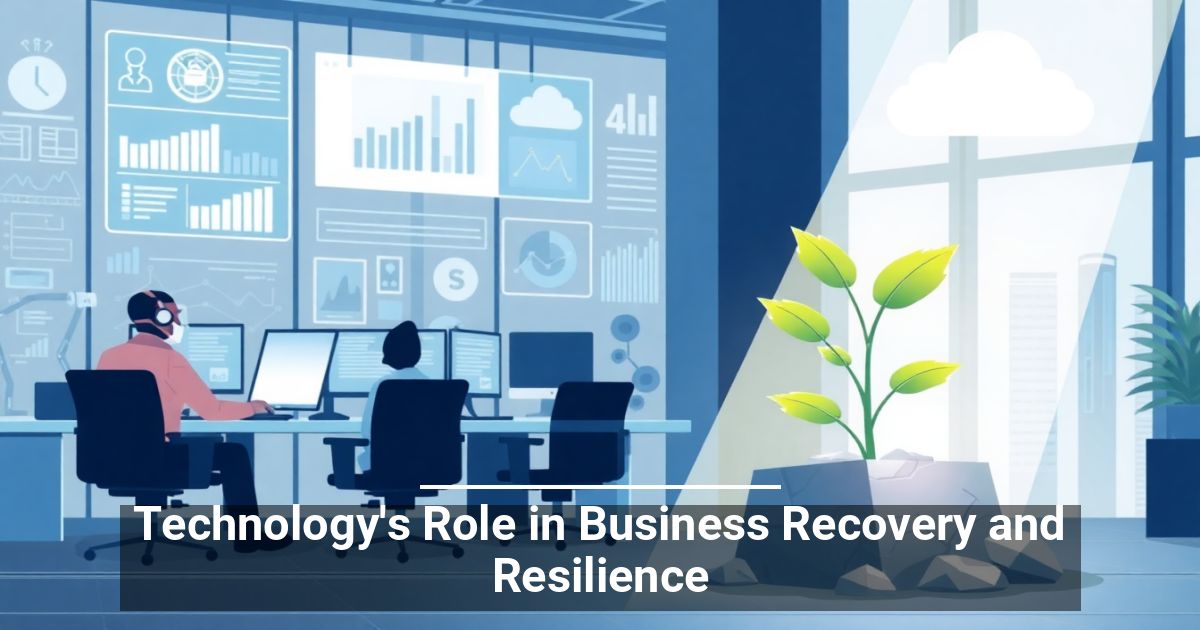
 Do you have the tools to help your establishment thrive under pressure? Learn how smart tech adoption can take business recovery and resilience to the next level.
Are Traditional Setups Enough To Compete in a Tech-Driven Economy?
The digital landscape is changing fast. Just a decade ago, concepts like machine learning or real-time data analysis felt futuristic. Now, they're shaping how businesses operate daily.
The average consumer expects seamless digital experiences, while markets across the biggest industries demand adaptability. If you're not keeping up with tech shifts, you risk falling behind companies that have taken a more proactive mindset.
It's not just blindly adopting new tools, either. You must embed continuous learning, flexibility, and forward thinking into the company culture.
Emerging Technologies for Business Resilience and Disaster Recovery
Instead of waiting for a crisis to hit and scrambling for solutions, why not prepare in advance? Consider the following tools that have turned the vulnerable setups of many businesses into robust systems.
Shape a Smoother Future With Artificial Intelligence
The shift to the digital space has given businesses access to vast amounts of data, but there's only so much a human team can analyze. Artificial intelligence (AI) can process information at lightning speed and convert it into actionable insights.
One good example is predictive maintenance, where AI-driven systems identify equipment failures in advance so your operations don't come to a grinding halt. With dashboards and predictive analytics tools, leaders can instantly view the health of their operations and respond strategically rather than react on impulse.
Cloud Computing for Seamless Continuity
Gone are the days of relying solely on physical servers. Cloud solutions provide a scalable, flexible infrastructure that protects your business data in the event of an unexpected event.
For instance, cloud-based backups mean you won't lose critical information when a fire or earthquake hits your physical locations. Migrating to the cloud ensures you're not tethered to a single point of failure, empowering your team to work securely from anywhere during disruptions.
If you prefer to preserve on-premises control for your most sensitive data, you can get the best of both worlds with a hybrid cloud model.
Automating Processes To Strengthen Recovery Speed
Do you need a reliable, silent partner when chaos unfolds? From instant alerts for system downtimes to workflows that execute recovery protocols, automation minimizes the room for human error.
For example, DevOps teams rely heavily on Infrastructure as Code (IaC) to quickly rebuild and configure environments. Finely tuned failover systems mean applications can switch to backup servers seamlessly, ensuring no service interruptions for customers. Streamlined processes like these save time and allow your key players to focus on higher-level risks instead of firefighting.
Create a Culture of IT Resilience Today
Whether it's cybersecurity risk management tools or automated business continuity planning, none of these technologies will work if your people aren't prepared. Invest in training programs that emphasize adaptability. Encourage cross-departmental collaboration and run routine drills to simulate crisis scenarios.
Combining state-of-the-art tools with a culture built on business recovery and resilience ensures you can weather any storm.